Categories
Author: lifecyclehappy
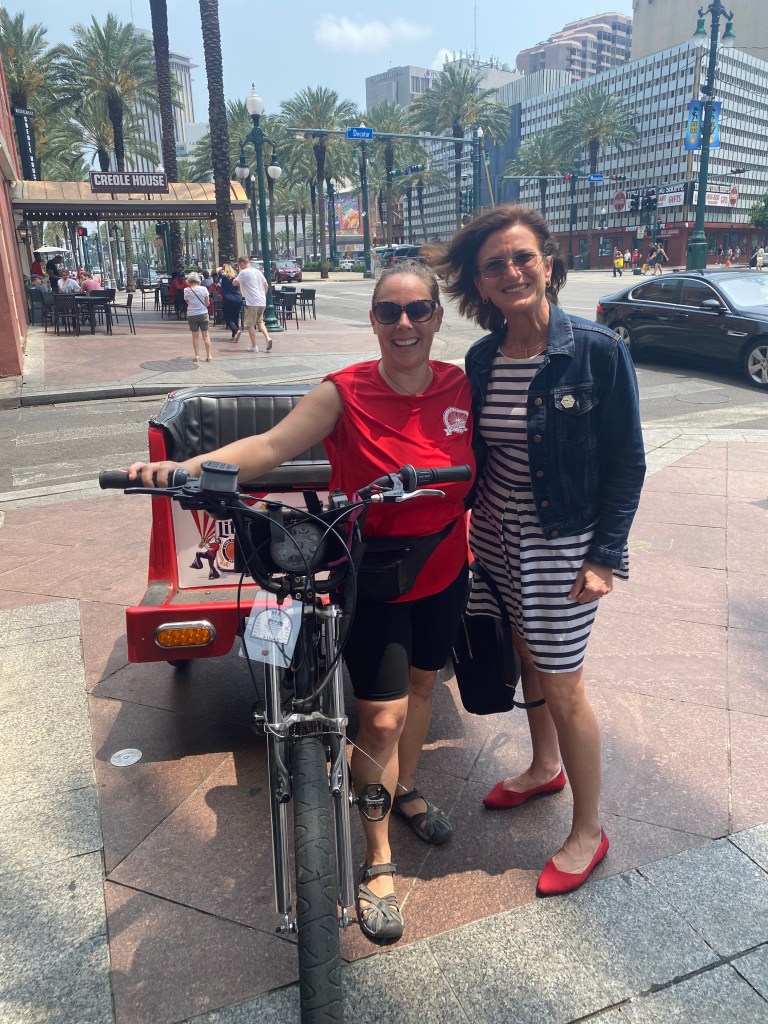
My first visit to New Orleans, a city that is lively as it is colorful and passionate and hotter and more humid than Washington, DC, if that is possible, was in May 2024.
The streets in NOLA – the abbreviation used with love on memorabilia – are mostly multi-modal, and the sidewalks are as wide as the ones in Las Vegas. Jazz is nicely woven in the air we breathe as we walk around, and the historic buildings seem to smile at us from underneath fresh coats of colorful paint. The Mississippi River meanders slowly through the historic neighborhoods and submits to the engineering features that hold it within its banks – most of the time. This is a perfect hub for family visits, friends gatherings or conferences.
While the green streetcars are gliding through the neutral zone (aka median), always full, and pedicabs are pedaled through noiselessly, there is still a good volume of cars. There is a continuous buzz, and it is normal, expected. There are taxis and Uber and Lyft cars with multiple occupants but then there are the ubiquitous single occupancy vehicles. And I am usually in one of those.

Going back a few years I remember walking everywhere and taking the bus or the train for longer trips. The bus was always or almost always full to the point that people’s personal spaces were crushed to non-existent, but politely smiling and apologizing to each other. The train had somewhat more room for that personal space unless it was the beginning or the end of the school session. Automobile rides were saved for long family vacations and were almost weird.
Today I value my automobile and my alone time to the point that I have to prepare myself for the days when I decide to take the metro or the train to my destination. Technology makes it possible for me to plan my trip to the minute and I get a very good estimate for the departure and arrival times. The metro cars are spacious and comfortable, and they have been safe for me so far and I hope to keep that trend. The main conditions are met, yet I only do this 10% of the time I could.
It is the American Dream to become prosperous and own at least two cars, one for each family member who is of driving age. Most cars have a single occupant. It is how we live.
As an immigrant I know that I longed for and I believe I fulfilled my American Dream, and in the process, I changed my travel mentality. It is now second nature to take my car keys and go. I have to make a conscious effort to think about and take the metro to my office. And I am not alone. I believe that so many Americans find it far more convenient to travel by automobile, even if sometimes slower than a marathon runner.
How do we change this mentality?
Here is my take on it.
Planning.
Every time I am stressed, I realize it is because I do not have a plan. I am not prepared. I fix that by planning my months at the end of the previous month, and I plan my weeks on Friday nights or over the weekend. I envision each day and what I need to do to fit all I want to do in the hours I have, and then some, because I live in the DMV area and that is how we function here. Plan my Trip – this is literally the name of the website that all but takes me to my train and carries me to my office. I do have to drive to the station and park my car but with good timing I can catch my train and be on the planned trip schedule. I envision how my day will look and prepare for it. It is work. It takes time. But it may save the planet if I do it more often and I inspire other people to do it too.

When it comes to inspiring other people I believe it can only be done through multi-disciplinary collaboration. I may work with my fellow planners and my colleague engineers. Starting with conveniently located stations, continuing with accessible routes for all modes of transportation, safe parking for vehicles, bicycles and other devices and inviting facilities and trains and topping it all off with wayfinding and smart informational signage and panels and smart apps for the smart card and I think we will get much closer to higher transit users and fewer single occupancy cars on the roads.
I challenge you, my fellow dreamers, planners and colleague engineers, to create your inspirational vision about making public transit a more appealing mode of transportation where you live. And to make a difference within the time that we have.
P.S. Biking is my next vision, but I am saving it for another time.
Categories
My Mentor
I spent the first 31 years of my life in Romania where schools are intense and sixth grade geometry problems are worthy of the Fundamentals of Engineering exam. While the education I received was very good and I still remember my teachers I cannot remember having a mentor. Now I know that even without a formal mentor there were many people, events, books, music and movies that influenced my life like true mentors.
Music was my first mentor.
In Romania, during my childhood, the music stores were well stocked with Romanian classics, modern and folkloric music, and the classic music by the giant composers Beethoven, Mozart, Tchaikovsky, Prokofiev and many more. The modern music of the West was conspicuously missing from the front shelves because it was sold through the back doors to people other than people like me. So I bought the discs that were on the shelves.
The great classics!
I could only afford to buy one vinyl record at a time and by the time I would get another one I would have the first one memorized.
I don’t know if the tumultuous history of Romania or the harsh history of some neighboring countries had an influence on me but my favorite composer was and is Beethoven. The drama in his music resonated deeply with me and his music may have been my childhood first mentor. I learned from him that beauty is in everything. I learned discipline from the well organized concertos and symphonies. I learned how to hear the stories in his music. Then the music connected me with math. I would listen to music while doing my homework and it felt that the problems were much easier. I started to love math homework and I still do.
I have been listening to the great classics and thought this was the best music until one day my friend shared some of her discs with me. All western modern music. The first album was Tatoo You by none other than the Rolling Stones. Wow! I did not speak english and did not understand the words but I memorized the music and the lyrics. All the albums in her collection were not like mine, you see those were on the back shelves at the store where only certain people had access. My point, you may ask, is that there is always more that we can see or find. Sometimes those things comes to us but sometimes we need to reach out and find them.
All of my mentors, people, music or nature, have come to me and left unforgettable marks on my life. Others were out there for me to reach out. I learned that when need strikes it is great to remember to reach out to my mentors.
For Margaret.
Categories
The Newspaper
I live in a small town with a monthly newsletter delivered in our mailbox, as a hard copy. Of course there is an electronic version on the website but I get the hardcopy in my mail box and I like to leaf through it. On the second to last page there is an article that is written by a retired writer who enjoys contributing to this free newsletter. She picks her themes and writes what pleases her. It is refreshing. One such article was about the author’s favorite thing to read in a newspaper: obituaries. She was confessing that she was not inclined to write about her interest in obituaries until her daughter prompted her.
Before reading her article I had a tendency to take a furtive look at obituaries, feeling guilty that I am not in there and there are so many people who lost loved ones and are mourning their loss. But she changed that for me. Since I read her article I started looking for the obituaries in every publication I find coming across my desk or desktop.
One day I picked up an old issue of the Civil Engineering magazine which was at the top of the stacked magazines I saved to read later. I flipped through to select a couple of articles to read when on page 77 of 80 I found the obituaries. I was surprised and picked another issue to see if it also had obituaries but that did not have it. The point is that the one random issue of a technical periodic I picked up did have obituaries, an entire page of them. The first person listed was Stephen D. Bechtel Jr. Dist. M. ASCE. THE Bechtel whose firm is well known world wide for extraordinary projects. I worked on one of the projects led by Bechtel: The Silver Line Phase I, where I had the chance to learn about the Bechtel culture and liked it. Reading about the accomplishments of a man who was a titan of my profession gave me wings.
Mr. Bechtel had a long list of accomplishments but I immediately zeroed in on the fact that he supported the creation of “Dream Big”, the single largest gift in the history of the ASCE organization. It is a good movie that I watched a few times along the years and inspired my friends to watch it too. Maybe I liked it so much because I am an engineer, so you may not like it but I do suggest that you find a copy and give it a shot. There is more than engineering in the movie.
I kept on reading and I realized that the message captured in less than 500 words was more powerful that the entire magazine for me in that moment. Reading the page was humbling and inspiring. It was sweet and reassuring. Reassuring that what we do matter.
I now make it a point to look for the obituaries and learn from them as much as I can. I learn mostly what life may be about: the things we do for ourselves and for other people selflessly as if they did not matter but do matter. We do them because we like doing them not because they matter. And we should keep doing them even if nobody seems to notice now but we notice and we know that we are making a difference. If it gets noticed later it may no longer matter for us but darn! We did make a difference and we did matter.
I will keep doing what I do, and work on doing it better every day, because everything matters to someone now and it will matter to someone else some day. And that matters. A lot.
The Project Management Institute (PMI) is a leading international organization for project management career and professional development. But you know that already and the purpose of my post is to share some of the things that helped me and might help you to pass the test and become certified.
I started the process by becoming a PMI member and went through the prerequisite training. The PMI membership came with the books required to study and discounts for other helpful reading materials. I took the test almost one year later. And that was OK.
I jumped on YouTube and watched one video that promised I can pass the exam without studying (I wanted to believe it) only to hear the author saying that it took 4 weeks to read the PMBOK and one more to read the Agile Manifesto. So yes, it does take quite some time to study for the exam. I watched another two videos. Their advice was to read the books; now; and solve practice tests; now; then read about the knowledge areas I was weak in; solve another practice test; take the real test.
This worked.
I registered for the test on a date five weeks from that day and mapped the PMBOK 6, PMBOK 7 and the Agile Manifesto in four weeks worth of time. I saved the last week for practice tests and rest before the test. Then studied.
On the test day I went to the test site (there is an online version but I knew how much better I could focus in a small cube with no distractions or options to move around) and waited for two hours for the system to start functioning and for the test to start. Almost five hours later I finished and the result was Pass! Yay! Now what? No more problems to solve? After a marathon of situational questions that had my mind in high gear and my heart pacing itself to make it through? Just drive home and continue working as if nothing happened? Well, yes. A little bragging or sharing the news with family, friends and coworkers helped transition down from high gear.
So how did I actually do it? Was it hard? Yes and no. Yes because it took a long time from when I became a PMI member and started the training until I took and passed the test. I could have done it faster but I let other commitments take precedence and postponed the test taking. No because the material I studied is very good and I am applying it every day not only in work situations but in my private life as well.
What happened first?
A coworker who had taken the test a few months before offered advice.
1. Become a PMI member and save money overall – I did it without hesitation, very good idea.
2. He recommended Udemy, a website that offers the 35-hour prerequisite training program at a lower price than offered by other providers. The website clarifies whether or not the training is accepted by PMI – I checked that before enrolling and it was OK. Always check before committing.
3. He recommended that I study every day as many hours as I can between scheduling the test and the day of the test. This was to be a five-week period for me.
4. He said that by the middle of my training time I should be able to fill out the Knowledge Areas table without consulting the book and know the inputs and outputs for all the processes.
What was next?
Udemy! YouTube! Audible! Scribd!
All three platforms have very good information and using the audio resources was helpful because I drive quite a few hours every week and I catch as much as I can while driving.
The three channels I followed and found very helpful are:
- PMPwithRay – Ray’s videos are very well done and he also offers a set of practice tests. I purchased his set for less than $50 and took the tests at least three times at 1-3 weeks intervals. The best part about the tests is that Ray offers full explanations for each answer and provides links to the respective videos on his YouTube channel.
- David Mclachlan’s 200Agile PMP Questions and Answers. David goes through each question and answer methodically and explains why an answer is good or bad. He helped me develop a test taking mind set while also cementing my understanding of the Agile methodology. I think I went through the first 150 questions and it was fine.
- Varun Anand’s YouTube videos and his eduhubspot platform have a wealth of very good videos. He updates his content to keep up with the PMI changes to the test materials. Varun posted a video with his tips for passing the test and I recommend it, as well as the one providing tips on the logistics of the test: taking the breaks and more.
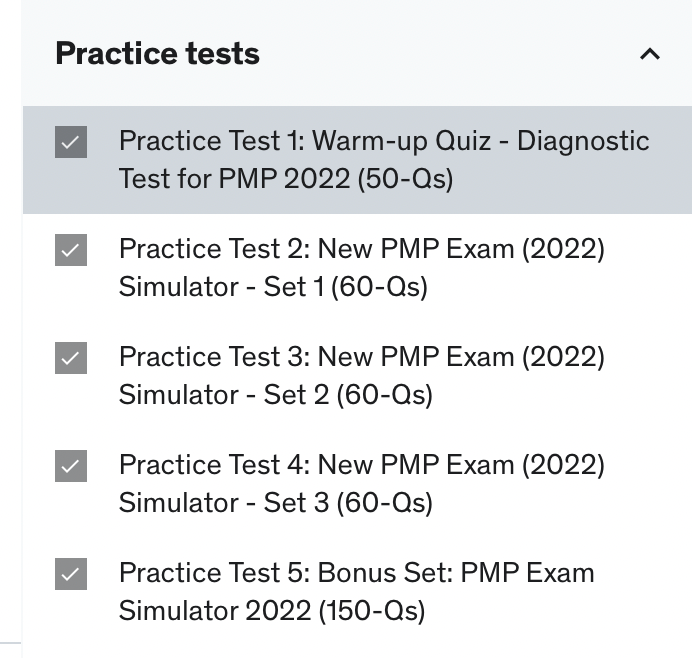
Watching videos and listening to audio books was then supplemented by reading the manuals and linking the material read with the questions. This was the most helpful part of the study program. Mixing up the video, audio, and hard copy materials with taking sample exams every week. The bundle of exam included five tests and by the time I retook each I hardly remembered the questions.
I passed, now what?
The certificate was generated 2 weeks after I took the test and that is when I also received the analysis of my scores. I had above target scores for al three domains: processes, people and business. It felt good to see the results of my studying pay off.
I wish you the best of luck with learning the materials and passing the test. I hope you will do great!
Categories
Collaboration
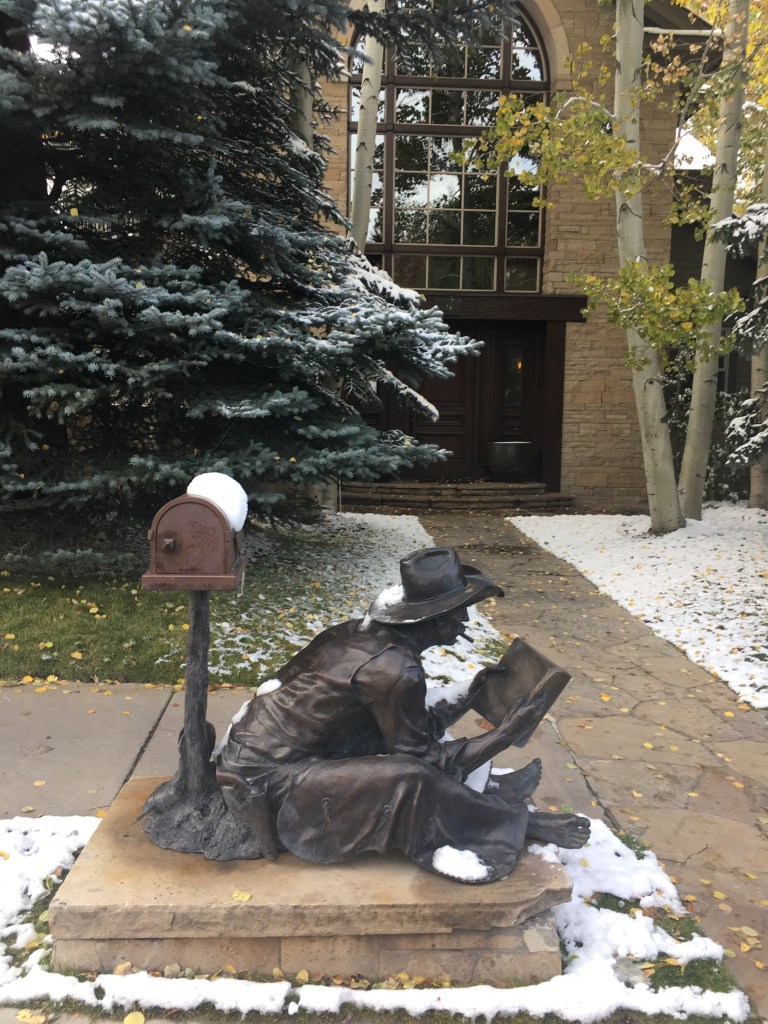
I can no longer do any automatic physical activity without the company of an audio book. A good set of headphones, my phone in a pocket or a belt and I am good to go. Cutting grass or painting lawn furniture, ironing or prepping vegetables for canning, get accompanied by a book listening.
Today I was painting two Adirondack chairs while listening to a self-help book. I read many such books and I took lessons from each. But this book was special because the author collaborated with me. She told me the entire story of her life, without leaving out the parts that people don’t usually talk about like breast implants. She started writing a blog and became so dedicated to it that it grew into a business and people adored her. That was until they asked her how she can possibly do everything she does and have a family with two small children. She was honest and disclosed that she did not do it alone, that her husband helped with house chores and they had a nanny for the children. She told people that she had help and that attracted major criticism from her fans. The critics were aggressive and she took it all to heart until she fell into depression. She recovered! Then wrote this book. I love that she wrote with transparency and candor and I felt like she collaborated with me by telling me how to make sure that I have large and small goals, that I need to step out in the world and chase my goals, and more importantly that I must ask for help. She also spoke about her breast implants, her hair extensions and the professionals she hires to make her look like a goddess for all the photographs that she posts on her media. She spoke of her relationship with her husband; not great as she was raised to be very conservative; and how she changed it to be an exceptional one. A few years after she wrote the book her husband asked for a divorce. She did not see it coming. She wrote a new book that I did not read but I was sad for her and watched her re-collect herself and continuing her mission.
Collaboration is the action of working with someone to produce or create something. (Google knows it all.)
Am I collaborating successfully? I am not sure, but my daily goal is to work with someone to produce or create something; anything that will move projects farther along even for a fraction of one inch, or that will make a person even a fraction of one percent happier.
What is the name of the book?
“Girl stop apologizing” by Rachel Hollis
It’s funny how protected the mask helps me feel. My eyes can still betray my thoughts, but I don’t have to smile. Maybe I do smile behind the mask but I don’t acknowledge it since I make concerted efforts to breath without fogging my glasses.
It feels natural to smile when I do not wear a mask; but maybe I smile too much. It must be. So many people misinterpret my intentions as too forward. A scene from the movie “Gigi” comes to mind; when the narrator walked in the park, he passed by many different characters. Of all, the mom driving a carriage with her children was not smiling and had a resolute face and posture. I realize this was mainly for the sake of dramatization, but really. A person who smiles a lot projects a different brand than one with a serious face and demeanor. I have been working on my own demeanor since I have been attending so many video conferences. I compared recordings across weeks and I see huge improvements; now I like the videos. No mask, but being behind a screen feels so close to being protected; like being behind a mask.
Wearing a mask may become a long-term habit that people, including myself, will embrace. Yes, there is the health advantage but there is a social shield advantage as well. In my opinion.
It makes me think of the ladies wearing burkas or hijabs. Muslim women have to cover themselves by law. And in the process, some of them appreciate the protective layer. I wonder if all of them feel protected. One of my friends from Pakistan covers her head every day and told me that she does it because she feels protected. Yep. I believe her. But I also have to admit that there were times when I wished she would let her beautiful hair be shown. She did it when we were by ourselves at my house or hers and were working on research papers.
Then I read “Reading Lolita in Tehran”. My Persian friend gave me the book. Goodness; how much I love that book! An English teacher’s memoir wrote about a book club she organized at her home and had seven lady students join. One of the messages conveyed by the book was reflected in a scene that is stuck with me: the girls arriving one by one, each fully clad in black robes and head coverings, then taking those off to reveal colorful personalities and outfits.
Hm, how about uniforms? I fought hard (in my teenage head, of course) against the uniforms I had to wear all through high school! But I was also thankful because the uniform helped me look like everyone else. I felt protected. This was protection from social class differences and it made a difference for that me.
This thought brings me to Coco Chanel. She knew very well the value and the role of our coverings. As an orphan child she wore a blue uniform, like all her peers, and she suffered because that was a label she could not shake off. Later she made a name for herself for the eternity by designing modern clothes. She did it because she wanted to be seen, be special and be where the “big” girls were. And she did it with talent and skill. She used coverings to make a difference. Maybe those were her mask.
I think I went full circle.
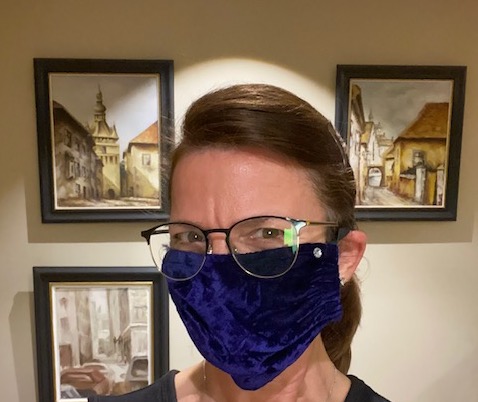
I did make a mask for myself. It is made of three layers of different fabrics, above what is recommended by the CDC, and, while protecting me, it shows a tiny glimpse of my personality. I will make a few more and wear them as often as I feel that I need to protect myself and take a break from smiling too much.
Categories
Changing my Career Path

There is nothing like being comfortable on a career path I selected for a long term, and then deciding that time for a change is now.
A few months ago I reached the conclusion that the best next step for me is to make a career change. I thought it will be an uphill and long search and I was not far from the truth; however, I flattened the slope after a couple of steep bursts.
At first I made a dream board with things I dreamed of doing and furiously looked for openings that matched those dreams. Teaching was one, being a public servant was another one and opening a business of my own was yet another before the idea or retirement stopped me dead on my tracks.
Retirement.
I needed to take that in one more time. What does it mean? What will I be doing with my time? But most importantly, will I be able to afford it?
I did not linger for long on that thought. It was too blurry and unappealing. Instead I continued looking for the available openings and writing more ideas on the dream board. I was doing all this in a void, all by myself, other than my husbands’ and daughters’ advice. That did not work nor did it feel right. I applied to several positions and I did not hear back from more than one: rejection.
Then I understood that I need to reach out for help. I opened the “box” of friends and colleagues from previous jobs and started conversations. It was the best idea – and you are probably thinking “duh”, but when you are in the middle of it you may not think of it at first. I didn’t.
Yes! And I received help! Starting with reviewing and drastically updating my resume and continuing with a series of why, when, who, and what are your dreams. It was the best push and it was in the right direction. I went through four or five versions of the resume, a couple of mock interviews and a few sessions of recording myself answering various questions that an interviewer might ask. I even reached out to one of my engineer friends who is a photographer and who took a few headshots for my new resume. They are amazing! I like the woman I see in those pictures.
The next help was the almighty Internet (did you know that one of the most beautiful women in the world came up with the idea that the internet is based on but never, or almost never received credit for it – Hedy Lamar?). I found “WorkitDaily” and other sites (a google search away) that gave me not only tips on how to present myself correctly and thoroughly but also improved my opinion about myself. The simple act of answering those questions made me think about all my strengths, qualities, skills and accomplishments. I am sure that so many of us take ourselves for granted and forget so many of the things we did to be who and where we are today.
Lastly, I started calling and emailing my friends.
The End.
P.S. I found my dream job and I am sure you can find yours if you are looking and even if you are not; if you find yourself in a comfort zone, start asking yourself questions and start updating your resume – it will open new horizons for you!

A few years ago I joined a Toastmaster club at the recommendation of a coworker friend and I remained active for several years.
Preparing for a speech was work at first but it gradually became fun. It was like solving a puzzle where the right pieces needed to be in the right places. Some speeches took days to write and I find that those were the ones when the subject was either too ambitious or not quite ambitious enough.
One speech that I thought was perfect was about my first visit to Las Vegas. The city that never sleeps and is renowned world wide for the adult playground it provides. That is what people usually think about Vegas. But the perspective I spoke about was different: the city as a transportation hub and as a man-made wonder surrounded by nature-made wonders.
I took the stage and I began my story when I landed at the empty airport, one hour after midnight. I was nervous about spending hours to figure out how to get to the hotel and not being able to rest for the next day. There was no need for my worry though because the app I used to call an Uber showed me the exact path I was to follow to meet my driver. Yes, it was an intricate and long walk but I had no trouble finding my way. That option was never before available on my Uber app. The driver dropped me off in front of the main doors of my three-tower hotel, at the designated taxi spot. I learned during my stay that the hotel had designated spots for each mode of transportation and those were marked on the hotel map and directional signs were ubiquitous. Despite the size of the hotel, the traffic flow was flawless.
The Strip, where the sidewalks seemed to be twenty feet wide, gave ample room to everyone. At well selected spots there were overpasses crossing the street that branched out for multiple accesses. It was the first time in a large city that I did not worry about crossing the street, or about running into people on the sidewalk. It was clear that those pedestrian facilities were not an afterthought but carefully planned, designed and built.
Then I spoke about the man-made wonders that extended as much underground as they did above ground and their display in the most favorable light throughout the day and night. Sure, the Eiffel tower and the canals of Venice look very artificial, but for a playground I thought they were well made.
I concluded my speech by describing the natural wonders that I visited outside the city with their grandeur and splendor. Thinking about Death Valley with hundreds of square miles of dry salt sea below the sea level still makes me hold my breath. I don’t know if the architects of Las Vegas wanted to compete with nature or enhance it by creating their own wonder, but I do know that it would have been a mistake to miss one or the other.
I spoke for 7 minutes about three aspects of the city that never sleeps: the welcoming transportation system, the playful architecture of the city and the complement of the grand natural wonders just outside its skirt. When I was done speaking I received the biggest applause (there were nine people in the room but it felt like one hundred) and sincere kudos for a very good speech.
The feedback I received pointed out that the speech was rich in simple descriptions that were delivered skillfully (if I may say so). I used three different spots on the stage area for each segment of my speech. I used arm gestures to express the grandeur of the city and of the natural wonders and I modulated my voice differently for each of the three parts. My face helped me too by expressing how passionate I was about my story.
Each time I rehearsed the speech I was not completely happy, often stopped in the middle and started over, but on the stage I presented it without a flaw. I loved the subject and I relived my visit as I was presenting it.
I am no longer a member of the Toastmaster club but I took with me the lessons I learned.
Being a good speaker starts with listening skills. By paying close attention to what is being said, asking clarifying questions and paraphrasing, you empower yourself to be a better speaker.
Non-verbal communication skills come into play next. Albert Mehrabian, a Professor Emeritus of Psychology at the University of California, Los Angeles, who was originally trained as an engineer, is best known for his publications on the relative importance of verbal and nonverbal messages and developed the 7%, 38%, 55% equation: Total Liking = (7% Verbal Liking )+ (38% Vocal Liking) + (55% Facial Liking). His theory provides important support for the fact that appearance matters in communications. His work Silent Messages was published in 1971 and has been interpreted and misinterpreted often. But his equation remains valid and cultivating voice skills and paying attention to what “face” we put forward make 93% of the tools needed to deliver a good speech.
And lastly, clarity and concision means saying enough to convey the message without saying too much. This is much harder these days since technology allows us to deliver our messages instantaneously. Centuries ago, people developed their messages during long periods of time and they were close to perfection. Now I remind myself to take a little extra time before sending a written message.
Being a good communicator and public speaker takes knowing the rules and practicing until you love what you are saying; it takes time, patience and determination, but it is well worth it. The Death Valley and the mini Eiffel tower are my witnesses!
 The Full Person